OSHA ITA 2027 Planning: Posting, Filing and Eligibility
For 2026 records, plan 300A posting and electronic filing as separate tasks. Check each establishment’s coverage before assigning a submission deadline.

Plan two deadlines for the 2026 records
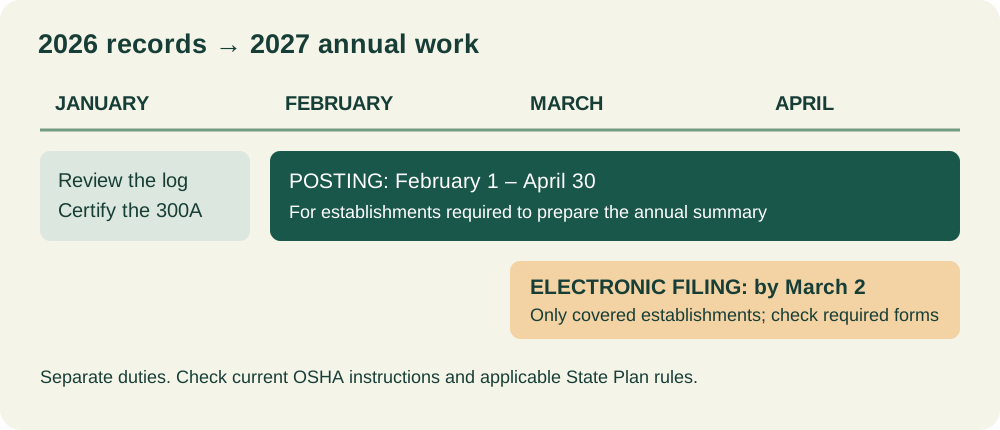
For records covering January–December 2026, applicable employers post the certified 300A from February 1 through April 30, 2027. Covered establishments electronically submit required data by March 2, 2027. Posting does not complete electronic filing, and filing does not replace posting.
These 2027 dates apply the current recurring rules. As checked on September 28, 2026, the ITA page still describes the 2026 collection. Recheck OSHA’s collection instructions before the 2027 filing period rather than treating this planning calendar as a portal-opening announcement.
Decide coverage before assigning filing work
This guide addresses the federal recordkeeping framework. Start by confirming whether records are required: the small-company exemption generally applies when the entire company had 10 or fewer employees throughout the previous calendar year. Industry exemptions and specific written recordkeeping requests also matter. This is a different test from establishment-level electronic filing.
State Plan requirements can be more stringent or supplemental in areas described by 1904.37. Check the applicable state agency, especially for public-sector employers. This article does not establish that the software supports every jurisdiction.
Use 1904.41 and OSHA’s current instructions to classify each establishment:
- 20–249 employees: 300A information for establishments in Appendix A industries.
- 250 or more employees: 300A information when the establishment is required to keep records.
- 100 or more employees in Appendix B industries: 300 and 301 information in addition to the required 300A information.
The thresholds concern employment at any time in the previous calendar year, not the annual-average employee number on the 300A. Include the employee categories specified by OSHA. Partial exemptions and individual OSHA collection notices can change the answer; do not decide coverage from headcount alone. The electronic requirements also apply in State Plan states.
Record the establishment’s EIN, industry classification, headcount basis, and coverage decision. Use the ITA coverage checker as a starting point, then confirm the result against the official rules and any notice received.
A preparation calendar with named owners
- October–December 2026: confirm the establishment list, source records, responsible reviewer, payroll contact, and submission owner. Check acquisitions, closures, and industry changes individually.
- Early January 2027: review log completeness and classifications. Resolve missing information and document estimates where the rules permit them; do not treat an ongoing case as closed simply because the year ended.
- Mid-January: reconcile totals and obtain annual-average employment and hours worked. Keep the calculation basis with each establishment’s summary.
- Before February 1: route the reviewed summary to a qualifying company executive and arrange posting at each applicable establishment.
- Before March 2: submit the required data for covered establishments, resolve errors, and save the actual confirmation.
- Through April 30: keep the posted summary visible and uncovered.
The January milestones are a suggested work plan, not additional legal deadlines. Add the actual dates to your team calendar using the OSHA deadline tool.
Fictional example: one company, separate decisions
A fictional employer has two establishments that must keep records. One has 60 employees and an Appendix A industry code. The other has 120 employees and an Appendix B code. Both prepare and post their own 300A; the first submits 300A information, while the second also submits the required 300 and 301 information. These facts are illustrative, not a coverage decision for your business.
The submission owner keeps a checklist by establishment and required form. A successful 300A upload does not mean the second establishment’s case-data obligation is complete.
Distinguish preparation from successful filing
A CSV validation, preview-environment upload, or saved draft is not a completed submission. Follow the current ITA process and retain confirmation for each required submission. Review case narratives and the excluded personal information fields before submitting 300/301 data.
Annual preparation also does not replace urgent severe-event reporting under 1904.39. Keep that workflow separate from the annual calendar.
Where 300log helps preparation
300log provides a workspace for organizing establishment records and preparing reports. Start with one establishment and compare the prepared output with the reviewed source records and official form instructions. Keep the employer’s review, executive certification, and filing confirmation as separate steps.
Open the recordkeeping workspace or compare the Free Edition and plans. A generated PDF or CSV is an output, not proof of certification, posting, or successful filing. Confirm the forms and workflow available in your account; do not assume an export button transmits data to OSHA.
For the signature step, use the 300A certification checklist.
Frequently asked questions
Does every employer have to file electronically?
No. Electronic filing depends on establishment size, industry, recordkeeping coverage, and any specific OSHA collection notice. Posting and routine recordkeeping use different eligibility rules.
Does filing through the ITA replace posting the 300A?
No. Applicable employers post the certified 2026 summary from February 1 through April 30, 2027. Covered establishments separately submit required information by March 2, 2027 under the current rule.
Does software certify the annual summary?
No. A qualifying company executive must examine the log and certify a reasonable belief that the summary is correct and complete. Generating a file does not complete that review or prove successful filing.
Sources
Primary regulation and agency guidance this article relies on.
- [1]29 CFR 1904.32: Annual summary, certification and postingOccupational Safety and Health Administration · osha.gov(opens in a new tab)
- [2]29 CFR 1904.41: Electronic submission and establishment coverageOccupational Safety and Health Administration · osha.gov(opens in a new tab)
- [3]29 CFR 1904.1: Company-size partial exemptionOccupational Safety and Health Administration · osha.gov(opens in a new tab)
- [4]29 CFR 1904.37: State recordkeeping regulationsOccupational Safety and Health Administration · osha.gov(opens in a new tab)
- [5]OSHA Injury Tracking Application: current collection instructionsOccupational Safety and Health Administration · osha.gov(opens in a new tab)
- [6]29 CFR 1904.39: Severe-event reportingOccupational Safety and Health Administration · osha.gov(opens in a new tab)
Official sources checked September 28, 2026. Specialist recordkeeping review is still pending; confirm applicability and current filing instructions before use.