Audit-Ready OSHA Recordkeeping Checklist for Safety Teams
An audit-ready file can produce any establishment's logs, privacy list, 300As, and 301s within four business hours, with the facts behind each case.
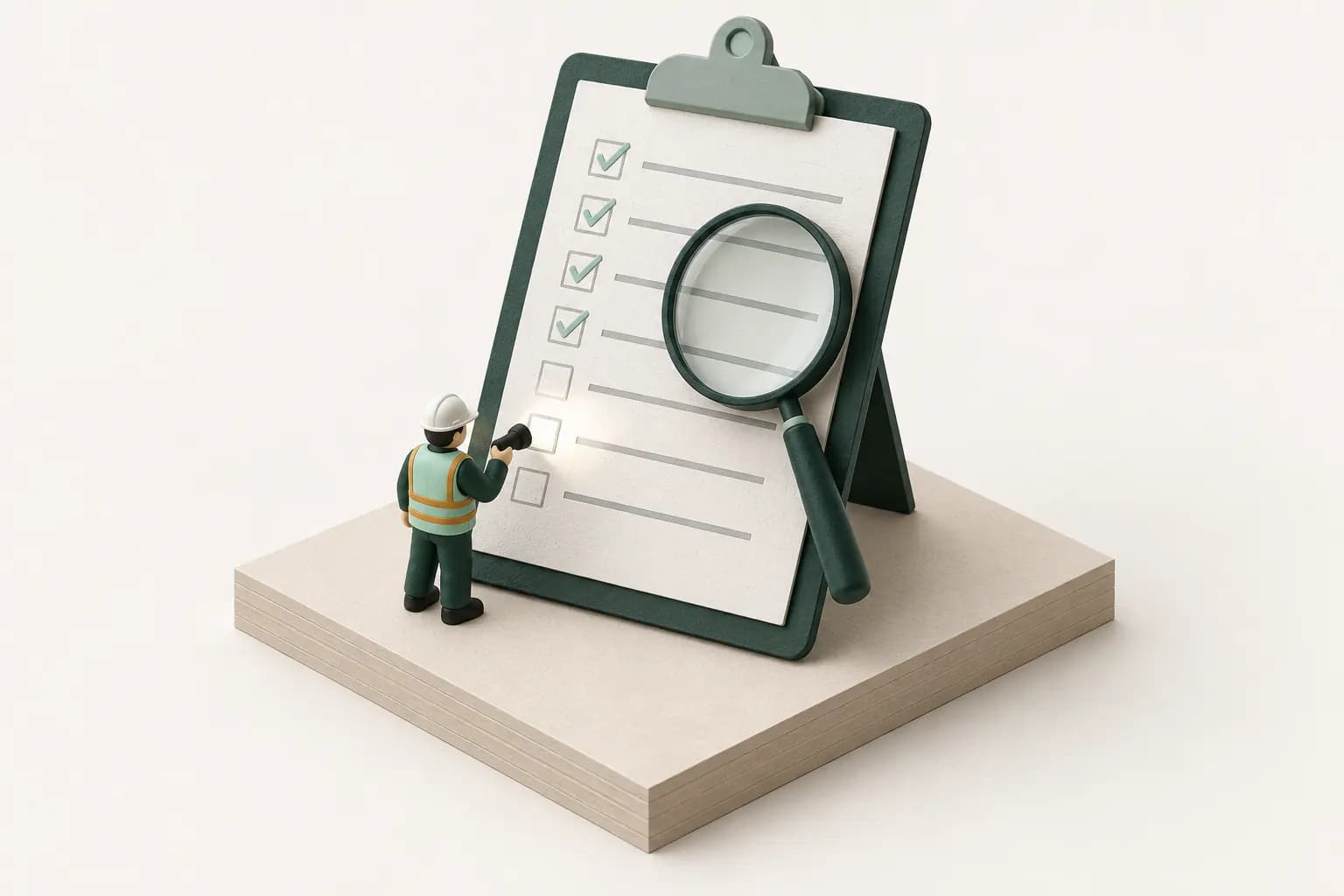
What you are aiming for
An audit-ready file can produce any establishment's logs, privacy list, 300As, and 301s within four business hours, with the facts behind each case. It is built during the year, one case at a time, not assembled after a request arrives.
Audit readiness is built throughout the year, not assembled after a request.
What you need before you start
Gather these first, and keep them with the record afterward:
- A sample of cases compared against their source documents
- Reconciliation of log totals with the 300A and any ITA file
- A list of corrections with dates and reasons
- Sign-off by the reviewer before the executive certifies
The rule behind the steps
At the end of each year, 29 CFR 1904.32(a) requires you to review the 300 Log to verify that the entries are complete and accurate and to correct any deficiencies before you total and certify it. The review has to be as extensive as needed to make sure the entries are right. Recordkeeping violations carry maximum penalties of $16,550 per serious or other-than-serious violation and $165,514 per willful or repeated violation (2026 amounts), so the review is where most of the risk is removed.
Step by step
- Review cases monthly.
- Close evidence gaps.
- Store a complete year-end packet.
Tip: Keep source facts, medical recommendations, classification rationale, privacy lists, summaries, and submission confirmations together.
Where this usually goes wrong
Teams often have the final forms but not the support behind close calls.
Most year-end corrections trace back to a fact missed months earlier: a restriction note that never reached safety, a case logged twice, or hours pulled from the wrong report. The fix is a monthly review of a sample of cases against their source documents, so year end is a confirmation rather than an investigation.
Compliance managers are judged on whether the records hold up later, so focus on the basis for each decision and a clean history of changes.
Special situations
- Privacy records need stricter access than ordinary case notes.
- Sites that use their own local spreadsheets drift apart; one intake standard across sites prevents most of it.
A worked example
An inspector arrives at a warehouse on a Tuesday morning and asks for three years of records. By lunchtime the site has produced each year's 300 Log, 300A, 301s, and privacy list, plus the ITA confirmations, because the monthly reviews kept each case's source documents attached to the case record.
How it affects the rest of your records
Every correction flows through to the 300A, the rates, and, for covered establishments, the ITA data, so a review that fixes the log has to reconcile those too.
Where 300log helps
300log shows which incidents are still in progress, keeps the 301 facts next to each log entry for review, and recalculates the 300A as you correct cases.
Frequently asked questions
How often should we review the log?
The rule requires a year-end review; monthly reviews catch late medical updates while the facts are still fresh.
What are the penalties for recordkeeping violations?
Up to $16,550 per serious or other-than-serious violation and up to $165,514 per willful or repeated violation, the maximums in effect for 2026.
Can we fix errors after the 300A is posted?
Yes. Update the 300 Log during the five-year retention period and keep a note of what changed and why.
What should an OSHA 300 log review check?
Work-relatedness, the recordability basis, the column checked, day counts, privacy cases, descriptions, and whether totals match the 300A.
Sources
Primary regulation and agency guidance this article relies on.
- [1]29 CFR 1904.29: OSHA Forms 300, 300A, and 301Occupational Safety and Health Administration · osha.gov(opens in a new tab)
- [2]29 CFR 1904.33: Retention and updatingOccupational Safety and Health Administration · osha.gov(opens in a new tab)
- [3]29 CFR 1904.29 privacy concern case requirementsOccupational Safety and Health Administration · osha.gov(opens in a new tab)
Written and reviewed by the 300log Editorial Team. Guidance, not legal advice: confirm edge cases with OSHA or counsel.